
Flights to San Francisco: Cheapest Airports, Best Booking Windows and How to Save
17 August 2026
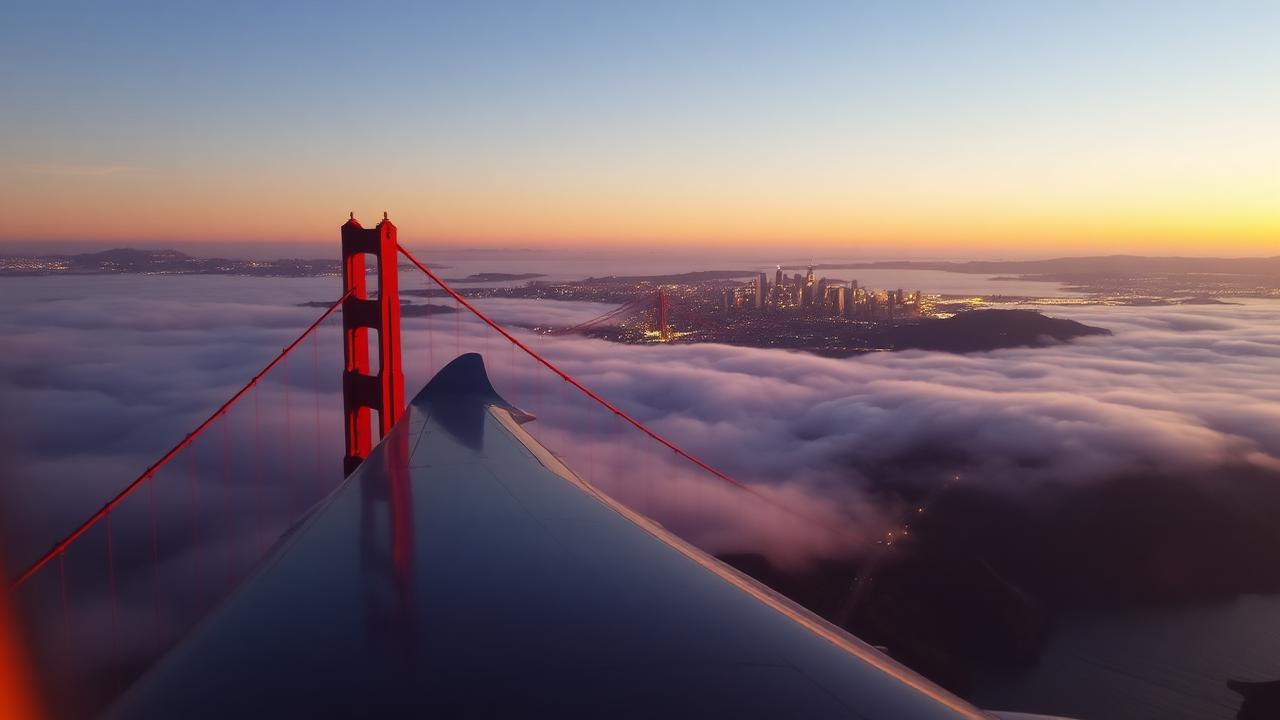
San Francisco sits at the centre of one of the most competitive air markets in the United States, with three major airports inside an hour of the city and heavy competition on both domestic and transpacific routes. That competition is your advantage — if you compare properly. This guide covers which airport to fly into, when to book, which months are cheapest, and how to avoid the fees that quietly inflate a low fare.
Use the search box below to check live prices for your dates while you read.
Search cheap flights for your dates
SFO, Oakland or San Jose?
The Bay Area has three commercial airports, and the price gap between them can be substantial.
- San Francisco International (SFO) — the main hub, with the largest long-haul network including most transpacific and transatlantic service. Best choice for international arrivals and usually the most convenient for the city itself.
- Oakland International (OAK) — across the bay, dominated by low-cost domestic carriers. Frequently the cheapest for flights within the US, and easily reached by BART.
- San Jose Mineta (SJC) — best if you are heading to Silicon Valley. Smaller, quicker to get through, and competitively priced on many domestic routes.
Getting into San Francisco
- SFO: BART runs directly from the airport into downtown in around 30 minutes and is by far the best value.
- OAK: the BART connector plus the main line takes roughly 45 minutes to downtown San Francisco.
- SJC: about an hour by light rail and Caltrain, or 50–90 minutes by car depending on traffic — which in the Bay Area is a real variable.
If you are staying in the city, SFO is the easiest. If your fare from OAK or SJC is meaningfully lower and you travel light, the saving usually survives the extra transit time.
When to book flights to San Francisco
- Domestic US routes: 3 to 8 weeks ahead is the usual sweet spot. Prices climb steeply inside two weeks.
- From Europe: 2 to 5 months ahead. Transatlantic fares to the West Coast are more volatile than East Coast fares because there is less capacity.
- From Asia and Australia: 3 to 6 months ahead. Transpacific demand is strong year-round and last-minute pricing is unforgiving.
- Peak periods (summer, Thanksgiving, Christmas): book 4 to 6 months out.
Timing details that actually work
- Midweek beats weekend. Tuesday and Wednesday departures are consistently cheaper than Friday and Sunday.
- Avoid Monday morning and Thursday evening, when business demand into and out of the Bay Area peaks.
- Search a whole week. Moving a departure by a single day often changes the fare more than switching airline.
- Consider a red-eye on the return. Overnight eastbound flights are usually cheaper and save a hotel night.
Cheapest months to visit San Francisco
- Cheapest: January and February, plus the first half of December before the holiday rush. Rain is likelier, crowds are minimal, hotels are cheap.
- Best value: late September and October — genuinely the city's warmest, clearest stretch, with fares below summer peaks.
- Most expensive: June through August, plus holiday weeks. Ironically, summer is when the city is foggiest and coldest at the coast.
The local joke about needing a jacket in July is accurate. Coastal fog can keep summer daytime temperatures far cooler than visitors expect, while autumn is warm and clear. Booking for October often means a better trip *and* a lower fare.
Direct versus connecting flights
SFO has extensive nonstop service, so connections are worth taking only when the saving is real.
- Compare total door-to-door time, not just the ticket price.
- Allow at least 2 hours for international connections; more if you clear US immigration at your first US airport, which is where customs happens on inbound itineraries.
- Prefer a single ticket for both legs so the airline is responsible if the first flight is delayed.
- Connecting through a winter-weather hub in January or February carries real delay risk. A West Coast connection is usually safer than a Midwest one.
Baggage and fare types
- Basic economy fares from US carriers often exclude full-size cabin baggage, block seat selection and disallow changes. Check the fare rules before comparing prices.
- Checked bags cost less prepaid online than at the airport counter.
- Low-cost carriers at Oakland advertise very low base fares; add bags and seats before you decide they are cheaper.
- If your plans could shift, price the flexible fare. The difference is sometimes smaller than a change fee.
Always add the bags you will actually carry to each quote, then compare like for like.
Entry requirements and arrival practicalities
- Visa Waiver Program travellers need an approved ESTA before boarding; apply early through the official government site.
- Everyone else needs a valid US visa, and appointment waits can be long.
- Passport must be valid for your full stay.
- SFO international arrivals can be slow at peak hours. If you have an onward domestic connection, allow three hours.
Making the trip cheaper once you land
- Skip the rental car if you are staying in the city. Parking is expensive and scarce, and transit plus rideshare is cheaper.
- Rent a car only for day trips — Napa, Muir Woods, Big Sur or the Pacific Coast Highway — and pick it up in the city for a day or two rather than at the airport for the whole trip.
- City passes can pay off if you plan to visit several paid attractions; they rarely pay off for two or fewer.
- Cable cars are charming but expensive per ride; a day transit pass covers them and everything else.
Booking checklist
1. Compare SFO, OAK and SJC on the same dates. 2. Search a full week rather than a fixed day. 3. Target midweek departures and consider a red-eye return. 4. Book domestic 3–8 weeks ahead, long-haul 2–6 months ahead. 5. Add baggage before comparing totals. 6. Confirm ESTA or visa early. 7. Travel in September or October if your dates are open — best weather, better price.
Compare live fares now
Fares to the Bay Area change daily, so run your exact dates through the search widget below. If your dates are flexible, the live price map shows where and when fares are lowest from your home airport, and the homepage search lets you compare several routes quickly.
Planning more trips? Read our Flights to Los Angeles guide, Flights to New York guide and Flight tickets to the UK guide.
Frequently asked questions
Which Bay Area airport is cheapest?
Oakland is often cheapest for domestic flights because low-cost carriers base there, San Jose is competitive on many domestic routes, and SFO usually wins on international fares thanks to its far bigger long-haul network. Run the same dates through all three before booking.
Is Oakland or San Jose practical if I am staying in San Francisco?
Oakland is, via BART — roughly 45 minutes to downtown San Francisco. San Jose is about an hour by light rail and Caltrain, so it only makes sense if the saving is significant or you are heading to Silicon Valley anyway.
Ready to book? Compare live fares
How far in advance should I book?
Around 3 to 8 weeks for domestic US flights, 2 to 5 months from Europe, and 3 to 6 months from Asia or Australia. Peak summer and the Thanksgiving and Christmas periods need 4 to 6 months.
What is the cheapest month to fly to San Francisco?
January and February, followed by the first half of December. Rain is more likely, but crowds and hotel rates are at their lowest too.
When is the best weather?
September and October. Contrary to expectation, summer on the coast is often foggy and cool while autumn is warm and clear — which means the best weather and lower fares arrive at the same time.
Should I rent a car?
Not if you are staying in the city. Parking is expensive and scarce, and transit plus rideshares cover most needs. Rent a car only for the days you plan day trips to Napa, Muir Woods or the Pacific Coast Highway, and pick it up in the city rather than at the airport to avoid airport surcharges.
Is a red-eye return worth it?
Often yes. Overnight eastbound flights from the Bay Area are usually cheaper than daytime departures and save you a hotel night, which makes the effective saving larger than the fare difference suggests.
How long should I allow for a connection at SFO?
Two hours for an international connection, and three if you are clearing US customs at SFO before an onward domestic flight. International arrival halls can be slow during peak arrival banks.
Do I need an ESTA to visit?
Visa Waiver Program travellers need an approved ESTA before boarding; apply early through the official government site. Other nationalities need a US visa, and appointment waits can run long, so start the process as soon as your dates are fixed.